Ads
Ads

Ads

Ads

Ads

Ads

Ads

Ads

Ads

Ads

Ads

Ads


Ads

Ads

Ads

Ads

Ads


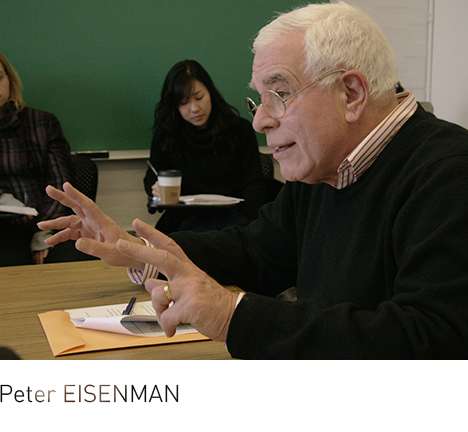
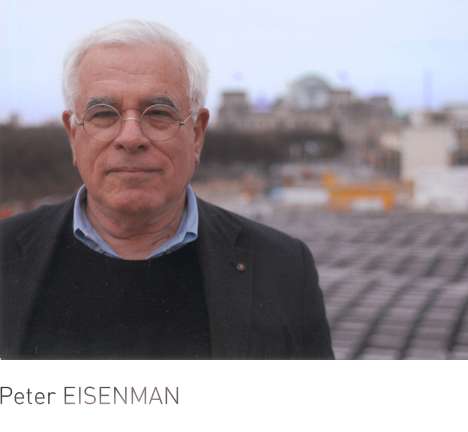
  • peter EISENMAN
    ann arbor MICHIGAN

    peter EISENMAN
    6.30pm / A+A Auditorium
    A. Alfred Taubman College
    University of Michigan
    2000 Bonisteel Boulevard
    Ann Arbor, MI 48109

  • in dialogue: eisenman + wigley VII
    new york NEW YORK

    In Dialogue: Eisenman + Wigley VII
    08.11.10
    12:00PM – 2:00PM

    Wood Auditorium, Avery Hall

    An On-Going Conversation between Peter Eisenman and Mark WigleySponsored by the Temple Hoyne Buell Center for the Study of American Architecture

  • written into the void
    2007

    yale university press: peter EISENMAN has been an innovative presence in the field of architecture and architectural theory for more than thirty years.

    [MORE]

  • tracing eisenman
    2006

    rizzoli: perhaps more than any other architect practicing today, peter eisenman has made a career out of devising a dialectic of oppositions in architecture. with references to societal alienation and existing architectural forms, his work derives much from friedrich nietzsche, noam chomsky, and jacques derrida. he led the loosely knit group of architects known as “the new york five” (which included john hejduk, michael graves, charles gwathmey, and richard meier), who made an effort to introduce a theory and artistry of modernist architecture as rigorous as that of the european avant-garde. this is the first comprehensive single-volume overview ever published on eisenman’s buildings and projects, from his first work, house i (1960), to his most recent projects, currently under construction in spain and germany. the book includes all the projects eisenman has created, with essays from international architects and critics, including greg lynn, sanford kwinter, and stan allen.

  • eisenman inside out
    2004

    yale university press: this book, a companion volume to eisenman inside out: selected writings, 1963–1988, gathers a generous selection of his later writings. in these texts eisenman undertakes theoretical analyses, close readings of his own works, and innovative assessments of the designs and writings of other architects and critics. in a major introduction to the volume, jeffrey kipnis looks closely at eisenman’s approach toward language and writing, a practice in which architecture itself becomes a form of written theory, as well as at his context within a critical canon that includes jacques derrida and rosalind krauss. presenting the range of eisenman’s important contributions to architectural theory, this collection of nineteen essays provides insight into the architect’s own understandings and methodologies and offers provocative challenges for his readers.

  • giuseppe terragni: transformations, decompositions, critiques
    2003

    monacelli: peter EISENMAN’S eagerly awaited magnum opus–forty years in the making–documents and investigates two of italian rationalist architect giuseppe terragni’s masterworks: the casa del fascio and the casa giuliani-frigerio, both in como, italy.

    [MORE]


  • 1999

    thames & hudson: diagram diaries is an unprecedented illustrated chronicle that showcases EISENMAN’S work to date from his earliest house designs to the heralded wexner center in columbus, ohio, through current commissions such as the memorial for the victims of the holocaust in vienna.

    [MORE]

  • formal basis of modern architecture
    1963

    lars muller publishing: in 1963, at the university of cambridge, peter EISENMAN wrote a dissertation on the formal basis of modern architecture. in it, the architect confronts historicism with theory and the analysis of form, whose distinguishing features he regards as the foundation of architectural composition. eisenman illustrates his observations with numerous, extremely precise hand drawings. this striking document, with its idiosyncratic photographs, fully deserves to be published here, for the first time, in a faithful reproduction of the original. in an afterword, peter eisenman discusses this remarkable starting point of his practical and theoretical work.