Ads
Ads

Ads

Ads

Ads

Ads

Ads

Ads

Ads

Ads

Ads

Ads


Ads

Ads

Ads

Ads

Ads


  • the fold
    1993

    university of minnesota press: in the fold, gilles DELEUZE argues that leibniz’s writings constitute the grounding elements of a baroque philosophy and of theories for analyzing contemporary arts and science. a model for expression in contemporary aesthetics, the concept of the monad is viewed in terms of folds of space, movement, and time. similarly, the world is interpreted as a body of infinite folds and surfaces that twist and weave through compressed time and space. according to deleuze, leibniz also anticipates contemporary views of event and history as multifaceted combinations of signs in motion and of the “modern” subject as nomadic, always in the process of becoming.

  • cinema 2
    1989

    university of minnesota press: cinema 2: the time-image brings to completion gilles DELEUZE’S work on the theoretical implications of the cinematographic image. in cinema 2, he explains why, since world war ii, time has come to dominate film: the fragment or solitary image, in supplanting narrative cinema’s rational development of events, illustrates this new significance of time. deleuze ascribes this shift to the condition of postwar europe: the situations and spaces “we no longer know how to describe”—buildings deserted but inhabited, cities undergoing demolition or reconstruction—and the new race of characters who emerged from this rubble, mutants, who “saw rather than acted.” deleuze discusses the films of rossellini, de sica, fellini, godard, resnais, antonioni, pasolini, rohmer, ophuls, and many others, suggesting that contemporary cinema, far from being dead, is only beginning to find new ways to capture time in the image.

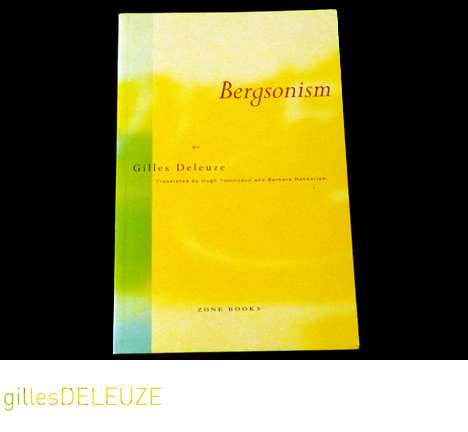
  • bergsonisms
    1988

    zone books: in this analysis of one major philosopher by another, gilles DELEUZE identifies three pivotal concepts – duration, memory, and élan vital – that are found throughout bergson’s writings and shows the relevance of bergson’s work to contemporary philosophical debates. he interprets and integrates these themes into a single philosophical program, arguing that bergson’s philosophical intentions are methodological. they are more than a polemic against the limitations of science and common sense, particularly in bergson’s elaboration of the explanatory powers of the notion of duration – thinking in terms of time rather than space.

  • a thousand plateaus
    1987

    continuum: a thousand plateaus is part of DELEUZE and GUATTARI’S landmark philosophical project, capitalism and schizophrenia – a project that still sets the terms of contemporary philosophical debate. a thousand plateaus provides a compelling analysis of social phenomena and offers fresh alternatives for thinking about philosophy and culture. its radical perspective provides a toolbox for ‘nomadic thought’ and has had a galvanizing influence on today’s anti-capitalist movement.

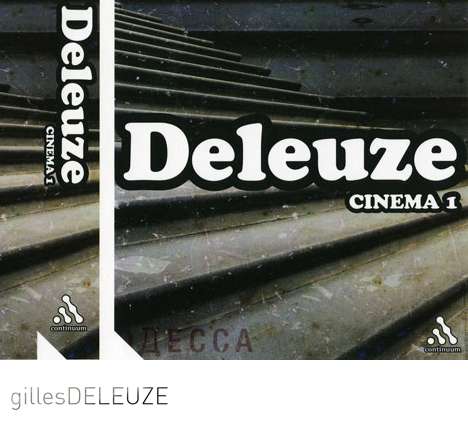
  • cinema 1
    1986

    university of minnesota press: first published in france in 1983, this is at once a revolutionary work in philosophy and a book about cinema. for DELEUZE, philosophy cannot be a reflection of something else; philosophical concepts are, rather, the images of thought, to be understood on their own terms…[CONT]

    [MORE]