mit press: in this challenging collection of fifteen essays, most of which originally appeared in october, she explores the ways in which the break in style that produced postmodernism has forced a change in our various understandings of twentieth-century art, beginning with the almost mythic idea of the avant-garde. krauss uses the analytical tools of semiology, structuralism, and poststructuralism to reveal new meanings in the visual arts and to critique the way other prominent practitioners of art and literary history write about art. in two sections, “modernist myths” and “toward postmodernism,” her essays range from the problem of the grid in painting and the unity of giacometti’s sculpture to the works of jackson pollock, sol lewitt, and richard serra, and observations about major trends in contemporary literary criticism.
-
-
art issues press : the 23 essays (or “love songs”) that make up the now classic volume air guitar trawl a “vast, invisible underground empire” of pleasure, through record stores, honky-tonks, art galleries, jazz clubs, cocktail lounges, surf shops and hot-rod stores, as restlessly on the move as the america they depict.
-
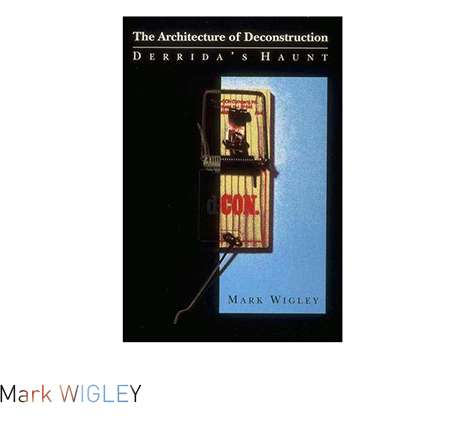
mit press: in the discussion of architecture, there is a prevailing sentiment that, since 1968, cultural production in its traditional sense can no longer be understood to rise spontaneously, as a matter of social course, but must now be constructed through ever more self-conscious theoretical procedures.
-
zone: although it is more than sixty years since georges bataille undertook his philosophical development of the term informe, only in recent years has the idea of the “formless” been deployed in the theorizing and reconfiguring of twentieth-century art.
-
slavoj zizek,: after reading empire, one cannot escape the impression that if this book were not written, it would have to be invented. what hardt and negri offer is nothing less than a rewriting of the communist manifesto for our time: empire conclusively demonstrates how global capitalism generates antagonisms that will finally explode its form. this book rings the death-bell not only for the complacent liberal advocates of the ‘end of history,’ but also for pseudo-radical cultural studies which avoid the full confrontation with today’s capitalism.
-
university of chicago press : the invisible dragon made a lot of noise for a little book when it was originally published in 1993 it was championed by artists for its forceful call for a reconsideration of beauty—
-
cambridge university press: the only full treatise on architecture and its related arts to survive from classical antiquity, the architecture libri decem (ten books on architecture) is the single most important work of architectural history in the western world, having shaped architecture and the image of the architect from the renaissance to the present.
-
AD: this third ad by the guest-editors of the highly successful emergence and techniques and technologies in morphogenetic design titles shifts the morpho-ecological design project into the realm of performance.
-
routledge: designers are becoming more directly involved in the fabrication process from the earliest stages of design. this book showcases the design and research work by some of the leading designers, makers and thinkers today. this highly illustrated text brings together a wealth of information and numerous examples from practice which will appeal to both students and practitioners.
-
actar: sanford KWINTER ponders the complex encounters between technology, culture, and architecture. critical essays offer an extended meditation on infrastructure, war, computation, mechanical and material intelligence, and other multivariate facets of modernity. far-reaching in scope, far from equilibrium amounts to a performance in writing of what kwinter describes as radical anamnesis: the imagination’s escape from the sterile logic of what is. compiling over a decade of architectural and critical writings, many published here for the first time, far from equilibrium is essential reading for anyone interested in the state of architecture and criticism today. a primer for (re)thinking design in the 21st century.